
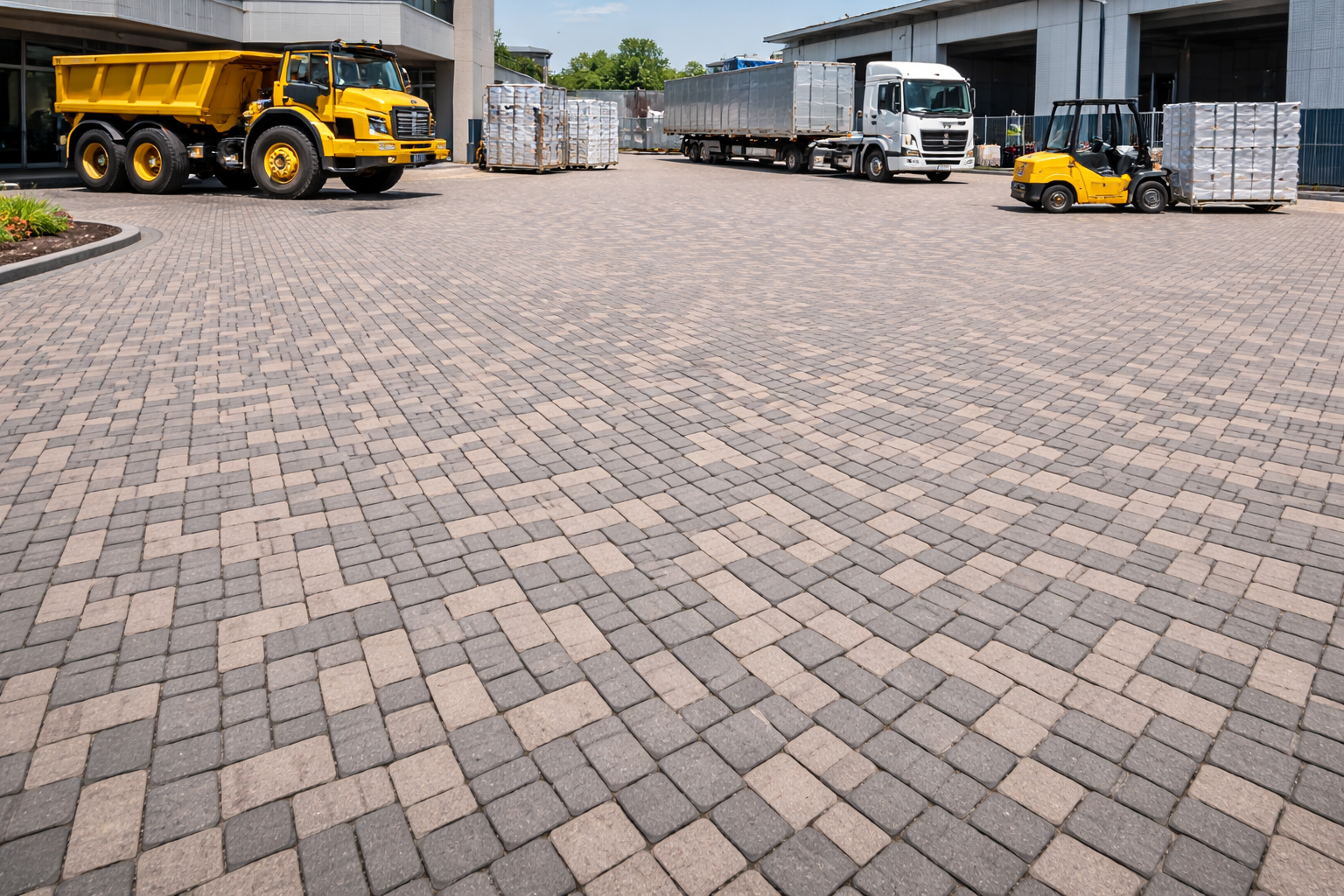
Industrial paving is all about strength and stability. These are the areas that take real punishment — delivery vehicles, forklifts, turning tyres, heavy loads, and constant daily use.
If the base isn’t built properly or the wrong paver thickness is used, the surface starts shifting, sinking, or opening up in the joints. That’s why industrial paving needs a heavier specification from day one.
At Premium Paving, we install and repair industrial / heavy-duty interlocking paving across Zimbabwe, including Harare, Bulawayo, Mutare, Gweru, and other major towns.
We commonly recommend 80mm interlocks (interlocking pavers) for industrial yards, loading areas, and high-traffic zones, because they’re designed for heavier load and long-term durability — especially when paired with correct base preparation and proper edge restraint.
Request an Industrial Paving Quote
Share a quick overview of the site and surface size, and we’ll come back with the next steps.
Where Heavy-Duty Interlocks Are Typically Used
Industrial paving is common in places where concrete often cracks or where gravel becomes a dust problem. We typically install heavy-duty interlocks for:
industrial yards and service yards
loading bays and delivery areas
warehouses and factory access routes
trucking and turning zones
workshop entrances and high-use aprons
commercial yards where heavy vehicles move regularly
If you’re not sure whether your site needs 60mm or 80mm pavers, we’ll advise based on the vehicles and the turning pressure on the surface.
Why 80mm Interlocks Are Recommended for Industrial Work
For heavy-duty areas, 80mm interlocks are a common standard because they’re designed to handle higher loads and repeated movement. The pavers themselves matter — but what matters just as much is the foundation underneath.
The real difference comes from:
the correct base build and compaction
a stable sub-base designed for heavier load
strong edge restraint to prevent spreading
a layout that holds tight under turning
When those pieces are done properly, industrial interlocking paving performs extremely well and stays repair-friendly if underground work ever happens later.
Levels and Drainage for Yards and Loading Areas
Industrial sites often have large paved areas. If water flow isn’t planned properly, you get puddles, soft spots, and long-term sinking in sections. We shape levels carefully so the surface drains naturally and doesn’t trap water where vehicles stop, park, or load.
A good industrial yard should stay stable, not “pump” under weight, and not become a pothole area after a few wet seasons.
Kerbing and Edge Restraint (So the Surface Doesn’t Spread)
Edge restraint is critical on industrial paving. Without proper kerbing or concrete restraints, heavy vehicle movement will slowly push pavers outward and open up joints.
We finish industrial paving with the right edging/kerbing detail so the surface stays locked and the lines remain neat over time.
Industrial Repairs and Lift-and-Relay Work
If your existing industrial paving is sinking, uneven, or shifting, it doesn’t always require full replacement. Many sites can be repaired using a targeted lift-and-relay approach:
lift affected sections
correct base issues
compact properly
relay the 80mm interlocks neatly
This is also useful after trenching or underground services work — interlocks make it much easier to restore the surface neatly again.
Industrial Paving Pricing in Zimbabwe
Industrial paving pricing depends on the area size, required base build, access for materials and equipment, edging/kerbing needs, and the type of traffic the paving must carry.
To give a clear quote, we’ll want to know:
what vehicles use the space (cars vs trucks vs forklifts)
whether it’s a turning/loading zone
the approximate size of the area
ground condition and drainage needs
We can quote as supply & fix, or labour only if materials are already provided.
Request an Industrial Paving Quote
Share a quick overview of the site and surface size, and we’ll come back with the next steps.
Areas We Serve in Zimbabwe
Premium Paving serves clients across Zimbabwe, including Harare, Bulawayo, Mutare, Gweru, and other major towns.